Wednesday, March 5, 2008

Bolivia and Peru Advice

Our friend, Elena, is planning a big trip to Bolivia and Peru. Dan and I have been emailing her advice, but I thought our advice might be useful to other travelers out there, so why not post it online? As a warning, this probably won't be very interesting to people who aren't planning a trip to Bolivia or Peru, so read at your own will.

Hotel in La Paz
We stayed at Hotel Gloria ( Potosí 909) in La Paz. This was after a 4 day Salt flat jeep tour where we had extremely rustic conditions, so we were looking to "splurge" in La Paz, and hence we stayed there for about $60 per night, which is a lot for Bolivia. It has hot water, and even heat in the room during the evening. It was fine, but it was definitely a hotel, rather than a hostel type environment.

From La Paz


Bus from La Paz to Copacabana
We took a "local" bus to Copacabana, which was much cheaper than a tourist bus. I think a tourism package would actually pick you up at the hotel and take you there, making it really easy, but a local bus is cheap and an experience if you are interested in that. We had a taxi take us to the bus station for buses headed for Copacabana (it is somewhere different from the main bus station, but people at hotels / hostels would know). Immediately, someone was rushing us onto their bus that was leaving soon. The key thing to know for the ride is that they make you get off the bus and take a boat across some water, and you leave your bags on the bus while the bus floats across the water on a separate vessel (shown below). We were scared of doing this, but it worked out fine. Make sure you have your passport though. Another plus with the local instead of tourist bus is that all the tourist buses leave extremely early in the morning and I'm pretty sure the local buses leave throughout the day. The local bus isn't exactly comfortable, but since it's such a short ride, it's worth it for the adventure. Plus, the price difference is something like $2 vs $20.


From Lake Titicaca


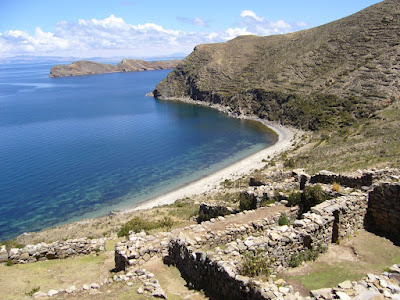
Isla del Sol
If you're not totally comfortable with Spanish, I'd recommend hiring an English guide for touring Isla del Sol. Once again, the price difference is something like $2 for Spanish and $20 for English, but our guide had a lot of neat stories about the island that made it much more interesting. We did Isla del Sol all in one day, which is a lot of hiking but good practice for the Inca Trail. I also remember that the early morning boat ride to Isla del Sol was really cold and I was glad to have all my removable layers (hat, gloves, fleece, windbreaker, and pants). You can buy nice and warm llama wool stuff most anywhere in the Andes, but I think we saw some of the best prices in La Paz.

From Lake Titicaca


Lake Titicaca, Peru
For the Peru side of Lake Titicaca, we did a one day tour of the floating islands and one other island. We did not stay overnight with locals, which some people said they loved but others said was too touristy or was awkward staying with people they didn't know. Although pretty touristy, I thought the floating islands were really neat. I could have skipped going to the second island because it was a really long boat ride to get there and I thought Isla del Sol was similar but better.


From Lake Titicaca


Pisac, Peru
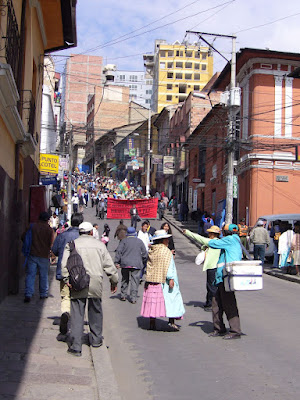
While in Cusco, I highly recommend going to Pisac, which is a nearby town. There is a market there that had some of the best shopping of our entire trip, but it might not be every day of the week. It also had the 2nd best ruins I saw on the trip (Machu Picchu was #1, of course). The ruins are on on the top of a mountain next to town. Even if you hire a taxi to take you to the top, be sure to wear proper hiking clothes and bring water because it's no easy stroll. Also, be sure to bring enough money for everything because there are no ATMs in Pisac. To get to Pisac from Cusco we took a taxi to a tiny little bus station on the edge of town. Then a local bus to Pisac, which costs less than a dollar, but be sure to have small change with you. In fact, always try to have tons of small change with you because people in Bolivia and Peru really dislike making change. For food, there is a really good empanada place in one of the corners of the market. From where the bus and taxis drop off, you have to walk about a block up a street/alley to get to the market (shown below). The first section of the market you'll encounter is the produce area. If you are walking up the street towards the market, take a left as soon as you get to the produce area. Tucked away in the corner is a little courtyard with an outdoor brick oven. It's right near a hiking gear store. They also sell roasted Guinea pig there, but I'm not into that.


From Cusco, Peru


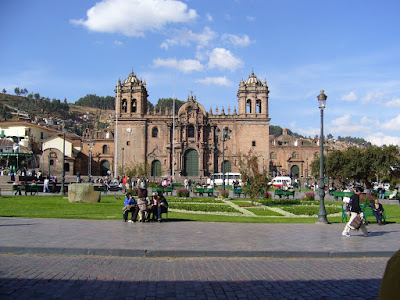
Cusco Sights
If you're going to see more than one of the ruins in and around Cusco, you should get a multiple day pass, which I think you can buy at any of the sites. They're a little expensive by Peru standards, so make sure you have enough cash with you for the first ruins you go to.

From Cusco, Peru


Security
Try to avoid having much cash on you (or at least disperse it) when you pass from Bolivia to Peru because I've heard of a scam where they claim your money is counterfeit. Also, always have your passport in a money belt or in a safe deposit box, never in a bag. Try to get a receipt for what you put in your safe deposit box and avoid putting cash in safe deposit boxes. Also, while on non-tourist buses, never let your carry-on bags out of touch. You may even want to safety pin some of the zippers shut because I've heard a few stories of people reaching under seats (I think someone tried to do this to me in Ecuador, but my safety pins stopped them). I've never heard of problems with large bags stowed under the bus, except for them getting dirty. When we flew from the US, United gave us giant plastic bags for our hiking backpacks which we continued using whenever we checked our bags (I think most big airlines have these, but you sometimes have to ask for them). Not only did the plastic keep our bags clean, but I also thought they provided an extra layer of security just because it made it more of a pain to steal anything.

From Argentina Part 1

Wednesday, January 23, 2008

Closing the book

Hello everybody! I am writing this from our new apartment in Oakland, California. I don't have many photos yet, but I do have one picture of us with our new car, the Honda Fit!


Before we get to engrossed in our new lives in California, I wanted to do a final recap of South America. For one, the trip lasted a long time -- 3.5 months of traveling. It was long enough that I really got used to the lifestyle. Speaking Spanish became second nature. I became used to meeting Europeans, Australians, and Canadians on a regular basis, and rarely met Americans traveling. Dissecting menus became a daily ritual, as did evaluating rooms at hostels, hosterias, posadas, and hotels. Our most important possessions were our passports, ATM cards, cameras, and photo backup CDs.

Do I miss South America? Let me count the ways:
- I miss the excitement of entering a town or city for the first time, and taking everything in as I step off of the bus.
- I miss the family owned bed and breakfast lodging, where the owners would go out of their way to make sure we were comfortable and enjoying ourselves.
- I miss sipping Caipirinhas while listening to a mix of ocean waves and live samba played by street musicians.
- I miss the landscapes of Bolivia.
- I miss Argentine steakhouses.
- I miss the awe-inspiring history of Peru.
- I miss the diversity and friendliness of Ecuador.
- I miss the music and energy of Brazil.
- I miss the wildlife of the Galapagos.

What am I glad to have back? There's a list for that too:
- I'm glad to have friends and family in the same country again.
- I'm glad to have American music back. Especially jazz.
- I'm glad to have English be the primary language again.
- I'm glad to have a phone.
- I'm glad to have the internet be reliable and helpful again.
- I'm glad to be able to turn on sports television and not have soccer be the only option.
- I'm glad to know where I'll be sleeping each night.
- I'm glad to be able to eat home cooked meals.

What were my favorite countries?
  1. Brazil -- The people are incredibly friendly and laid back, the weather is warm, the beaches are beautiful, the music is fantastic, and the food is delicious!
  2. Ecuador -- There is just so much to see and do in Ecuador, and it's incredibly easy to do it all because the country is so small! The people are friendly, the fresh fruits are great, and everything is cheap to boot!
  3. Argentina -- You can view glaciers, beautiful lakes and snow-capped mountains, tour wine country, ride horseback through ranches, and explore one of the largest and most sophisticated cities in the world. Oh yeah, and I love the steak!
  4. Bolivia -- If you don't mind roughing it a bit, you'll be handsomely rewarded by landscapes that are literally out of this world. It's also the cheapest country we visited. Now, if they could only get heat and hot water figured out.
  5. Peru -- Machu Picchu is incredible, as is much of the scenery here. For seafood, you can't do much better than ceviche in Lima. I just had a hard time with the "touristy" feel here, and the constant harassment from people hoping to sell me something.
What are the specific destinations that I would recommend most?
  • Salar de Uyuni, Bolivia. I truly felt like I was on another planet during this 4 day jeep tour. The landscapes were absolutely incredible, and like nothing I have seen before or after. I also loved the feeling of being completely isolated in the absolute middle of nowhere. If you can put up with very basic accommodations and long days sitting in a jeep riding on bumpy unpaved roads, this is one of the most incredible things you can do in South America.
  • Machu Picchu. Maybe skip the 4 day hike beforehand, but do not skip Machu Picchu. The ruins are truly awe-inspiring, and it deserves its status as one of the wonders of the world.
  • Galapagos Islands. If you love wildlife, this is one of the greatest destinations you can visit. Unfortunately, the costs to visit are high and will only get higher.
  • El Calafate, Argentina. The glaciers are phenomenal, it stays light out until 11pm during the summer, the town is cute, and it's Argentina, so you'll eat well.
  • Iguazu Falls. If you love waterfalls (or even if you don't), you'll be amazed by what you see and hear.
  • Ilha Grande, Brazil. The beaches are fantastic, there are no cars, and it's Brazil, so you'll definitely eat well and have incredibly friendly hospitality.
  • Banos, Ecaudor. You can do tons of different adventure activities during the day, then come back and relax in one of the many hot baths in town. The whole town is beautiful, and its Ecuador, so you won't be spending much.
All in all, I'm really glad we took the trip. Before we left, people told us it would be an experience of a lifetime, and it didn't disappoint. I'm also glad we did things on our own, and didn't just go on a long tour. Even though we suffered through some of the logistical planning, we got to become immersed in the countries and had the freedom to do whatever we wanted. It would have been nice to have a travel agent helping us out, but the Lonely Planet goes a long way. Now that we're done, I'll always be able to look back at our photos and this journal, and know that we did it. Thanks to everyone who wrote to us during the trip, offering words of encouragement or feedback on this blog.

In the future, I hope to write one last post about the logistics of traveling, in hopes that fellow tourists who stumble upon this blog will be able to use our experiences to better their own travels. I want to thank everyone again for reading!

Monday, January 21, 2008

Argentine Mixed Grill

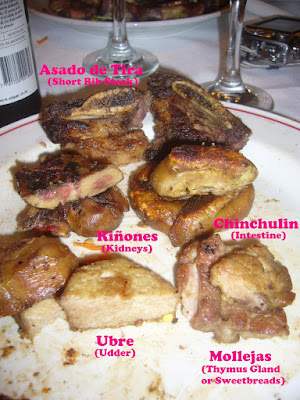
It took me awhile to get around to labeling the below picture, but I took it while at a restaurant in Buenos Aires with Dan and Joe. My personal favorite was the chinchulin.

From Buenos Aires ...

Monday, January 14, 2008

Brazilian Dining

Ecuador's abundant and diverse fruits made for amazing breakfasts, while Argentina's fertile pampas and love for meat made for amazing dinners. Unfortunately, Ecuador's dinners weren't much to write home about and Argentines tend to be satisfied with only a cup of coffee and a small pastry for breakfast. However, Brazil, being known for their tropical fruits, hearty churrascarias, and ample snacking options, could possibly be the superfecta of South American dining.

Unlike Brazil, we were always amazed by how trim Argentines were, despite their enormous meat portions. We suspected it had something to do with less driving and more walking, or possibly all that red wine. However, probably because of their amazing and abundant food, Brazil tended to have the heaviest people of all of the countries we visited in South America. That said, Brazil was also one of the friendliest countries we visited.

Brazil definitely has a wide variety of fruit, many of which I had never previously heard of. Cashew nuts are pretty common, but I learned that cashew trees also produce a fruit, referred to as caju in Portuguese. I never saw fresh caju fruit but the juice is very common in Brazil. The first time I had it I thought I was drinking watered down lemonade made from a powder. After learning what it was, I tasted it more closely and noticed a very subtle nutty flavor, but although not bad, I wouldn't say it's one of my favorite juices.

Guaraná is a very popular soda in Brazil. It is named after the guaraná berries it is flavored with, and is very sweet and carbonated. In addition, it is often cheaper than bottled water!

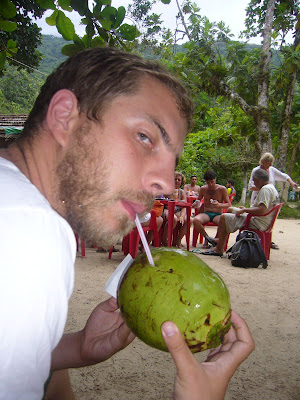
One of my favorite things to drink while in Brazil was coconut milk straight from the coconut! They would simply cut a hole in the top and stick a straw in. The milk has a gently sweet and coconutty flavor. I think it tastes more watery than milky and it is extremely refreshing. One of the best parts is that after you finish drinking, you can break it open and have a little snack. However, I tried to break one open using only a rock and it took forever (I guess I'm no survivor-lady). The second time around I went to a juice bar and they cracked it open for me.

From Ilha Grande, ...


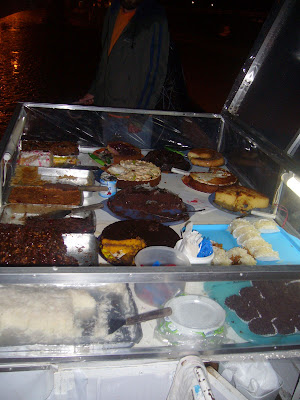
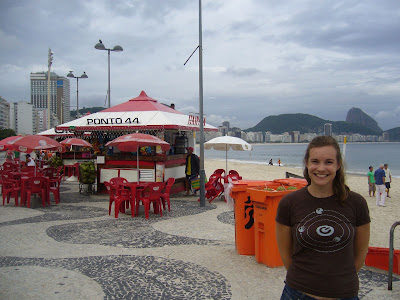
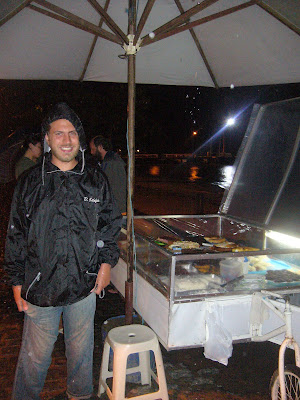
There are always ample opportunities for snacking while in Brazil. Almost every commercial corner in Brazil had at least one snack or juice bar. In addition, all along the sidewalks lining Ipanema and Copacabana beaches are snack stands. As if that wasn't enough, on the actual beaches there are dozens of vendors walking around selling beverages, açai smoothies, and even skewers of unshelled shrimp (these vendors sell much more than just food including sunglasses, purses, lime crushers, and even bikinis)! Even Praia Lopez Mendes, the remote beach on Ilha Grande that we had to hike to, had people selling sodas and sandwiches! Also on Ilha Grande, there were guys biking around enormous dessert carts. Below is a picture of one of those dessert carts:


From Ilha Grande, ...


Through our travels, we noticed that every country has a totally different type of empanada. Argentina's empanadas were the most similar to what I've had in the US. In Brazil, the empanadas looked like tiny little chicken pot pies, about the diameter of a can of soda. The crust is also similar to a flaky pie crust, and they are usually filled with chicken or cheese.

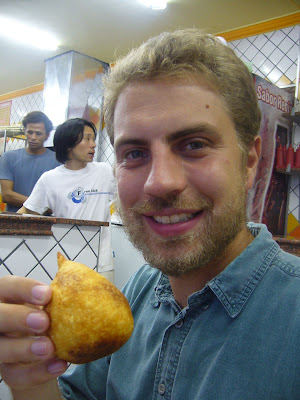
In addition to empanadas, Brazil has a wide variety of fried goodies to snack on. One of my favorites was like a fried, breaded hamburger. They kind of reminded me of my Mom's piroshkis (of course my Mom's were better). Dan's favorite was a teardrop shaped fried thing filled with chicken and cream cheese. Below is a picture of Dan eating on of those. However, according to our guide book, Brazilians never pick up their food with their bare hands, and often eat sandwiches with a knife and fork. Please excuse Dan's faux pas in the below shot:


From Ilha Grande, ...


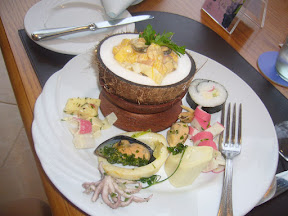
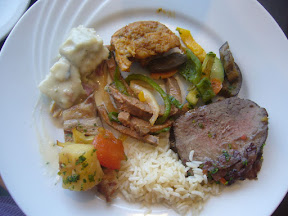
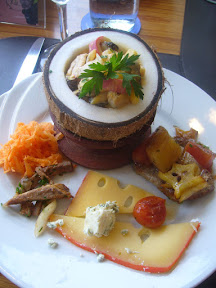
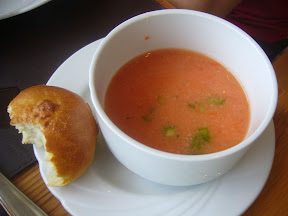
A very common dining option in Brazil are pay by weight buffets. As opposed to the all you can eat buffets in the US, I liked how these buffets don't encourage gorging. However, pay-by-weight buffets require a totally different eating strategy than all-you-can-eat buffets. I consider myself somewhat of an expert all-you-can-eat diner. While on the Argentine side of the Iguazu Falls, we splurged and went to the Sheraton's lunch buffet. It cost about $30 per person, which at the time was our most expensive meal of the trip (Brazil's stronger currency resulted in much more expensive meals). Below is a picture of each plate of food I had at the Sheraton buffet:
1st course: Appetizers

From Iguazu Falls


2nd course: Main dishes

From Iguazu Falls


3rd course: Best of appetizers and main dishes

From Iguazu Falls


4th course: Gazpacho

From Iguazu Falls


5th course: Dessert

From Iguazu Falls


However, at pay-by-weight buffets, it's all about the quality of food, not the quantity. Rice, pasta, and beans tend to be heavy yet less expensive, so they should be avoided. Meat is a much better alternative. Many pay-by-weight buffets had sushi and shell fish, but I skipped that at some of the less fancy buffets. Another thing to avoid at pay-by-weight buffets is leaving any food behind. However, Dan and I were new to Brazilian cuisine, and we weren't always sure what we were going to like. At our first pay-by-weight buffet we first got little portions of everything we wanted to try. Later we went back and got larger portions of the things we liked. However, I don't think this is standard practice in Brazil because the woman who weighed our plates seemed to find us very amusing.
Brazil is also known for their all you can eat steak houses, called churrascarias. The first churrascaria we went to, called Porcão, was almost exactly like Fogo de Chão. In addition to an amazing buffet, they also have gaúchos walking around with big skewers of meat. Each person is given a little circular card that is green on one side and red on the other, and turning the card to the green side indicates to the gaúchos that you want more meat. Each gaúcho specially prepares the meat that they are serving, and it all looks so good that it is difficult to turn them down. I call the green/red card the meat faucet, because if you leave it on too long you will inevitably end up with a plate piled high with meat. The biggest difference I noticed between Brazilian and US churrascarias is that Brazilian churrascarias serve corazóns, or chicken hearts. Each one is about the size of a large kidney bean and the gaúchos carry enormous skewers of them. Unless you stop them, they'll give you a plate full! Personally, I really like corazóns, but only in moderation.

Our last night in Rio we tried to go to a seafood churrascaria, called Marius. Half of the restaurant is a regular meat serving churrascaria and the other half serves seafood, including lobster tails! However, we were shocked to learn that the seafood side cost about $80 per person not including drinks, so we decided to settle for the regular meat side. However, apparently everyone else thought the seafood was too expensive as well because the meat side was totally packed and the seafood side was fairly empty. The Maitre 'D told us it would be a 10 minute wait. The restaurant is covered in cutesy nautical themed decorations, which is a little annoying when you're really hungry. 40 minutes later they finally seated us, but they put us in the upstairs area of the seafood side. They assured us that we would still get good service, but I had my doubts since we were so far from the meat kitchen. We decided to leave, hopped in a cab, and asked him to take us to a good churrascaria. He took us to this little place just around the corner from the Copacabana Palace. It had a live pianist who was playing pretty cheesy music, but the food was delicious and it was a perfect end to our trip.

Saturday, January 5, 2008

Brasil!

Top 10 things I learned while in Brazil:

10. You haven't truly been to Brazil unless you've heard "The Girl from Ipanema" played by at least five different groups
From Rio de Janier...


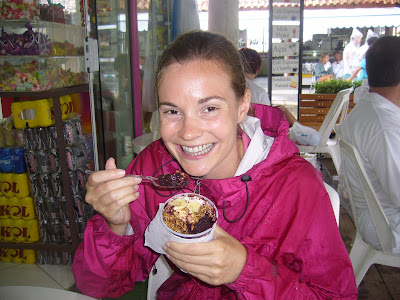
9. Açai is a type of berry, and açai smoothies (tastes like a blackberry icee with banana and granola on top) are supposedly energizing, but definitely filling
From Ilha Grande, ...


8. Brazilians are serious about their desert carts
From Ilha Grande, ...


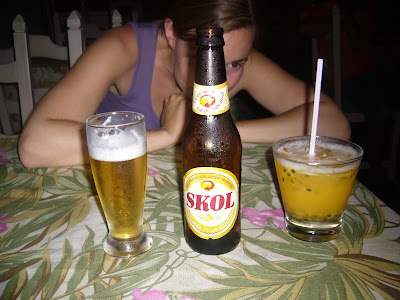
7. Skol beer tastes better than Skol vodka, but passion fruit caipirinhas are divine
From Ilha Grande, ...


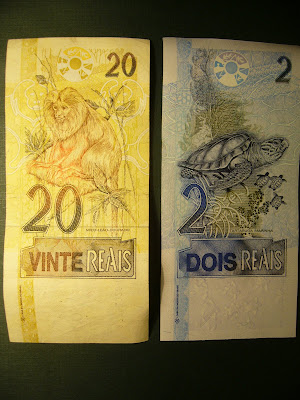
6. Instead of having people on their money, Brazil uses animals.
From Rio de Janier...


5. Portuguese looks pretty similar to Spanish, but sounds more like Dutch.
From Rio de Janier...


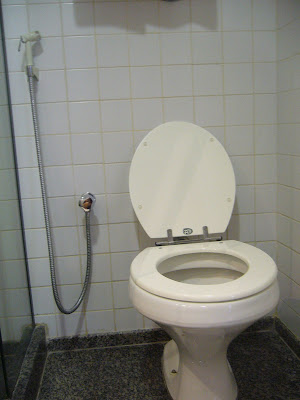
4. Instead of using a bidet, Brazilians only need a hose.
From Rio de Janier...


3. Don't believe locals when they claim there aren't any mosquitoes
From Iguazu Falls


2. Jesus loves Brazil
From Rio de Janier...


1. We love Brazil

From Rio de Janier...

Wednesday, January 2, 2008

Brazil -- The End of the Trip

Hello and Happy New Year!

Shortly, I'll be joining Carrie out in California, as we prepare to head back to reality. Until then, I might as well write about what we did to finish our epic South American journey. At Iguazu Falls, we crossed the border from Argentina to Brazil. Our original plans for Brazil included locations up in the Northern Coast, but due to fatigue and lack of time, we decided to simplify things.

After our time at the Brazilian Falls and Itapu Dam, we boarded a plane to Rio de Janiero. Our plan was to first investigate the island of Ilha Grande, then finish the trip in the city of Rio. With that in mind, we rode a 3 hour bus from Rio to the town of Angra dos Reis, where we found a place to stay for the night. The next morning, we investigated boats to Ilha Grande. We discovered that the "official" ferry left town at 1:30pm, but there appeared to be some "unofficial" looking guys willing to take us at 10:30am. Since we were eager to get to the island, we decided to take our chances with the unofficial boat. While it seemed a bit shady at times, it turned out fine, and 1.5 hours later, we were at the island.

From Ilha Grande, ...

The Island consists of one main town of about 3000 people, and has no cars besides one emergency vehicle. We quickly discovered that people freely walk down the main streets barefoot and in swimsuits (which don't consist of much in Brazil). We stayed at the Pousada Beira Mar, owned by a friendly German named Lutz, who thankfully spoke perfect English. Lutz enjoyed telling us his many travel stories and was very helpful in helping us decide what to do while on the island.

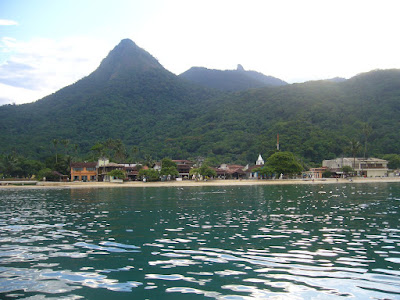
Ilha Grande is supposedly home to over 100 beaches, so needless to say, the primary activity on the island is going to the beach. The most famous beach on the island (and possibly in all of Brazil), was Praia Lopez Mendes. To get there from the main town, we could either hike 3 hours each way, or ride a 45 minute boat followed by a 30 minute hike. For the first day, we hiked to the beach, stopping along the way for a pleasant lunch along the water. We also stumbled upon some monkeys along the hike, but since we were scared of theft, we didn't have our camera with us to take pictures.

The next day, we went on a boat ride / tour, where we got to see other parts of the island. At one stop, we hiked into a cave, which got quite claustrophobic as crawling was necessary at times. Once we got further into the cave, there was a pool of water where we could wade and observe fish swimming in the distance. Outside the cave, we also made a boat stop at a lagoon where we did more swimming and snorkeling, before stopping for lunch and heading back.

On our third day on the island, we decided to take the easy boat ride back to Lopez Mendes beach, and bring our camera. Here are some photos:

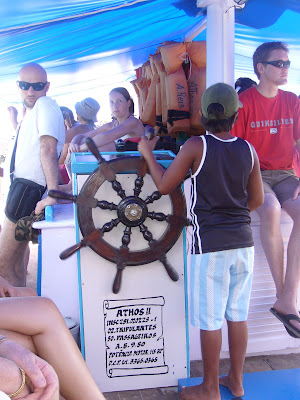
One of the boat drivers:
From Ilha Grande, ...


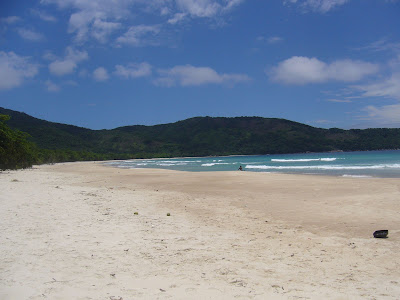
The beach:
From Ilha Grande, ...


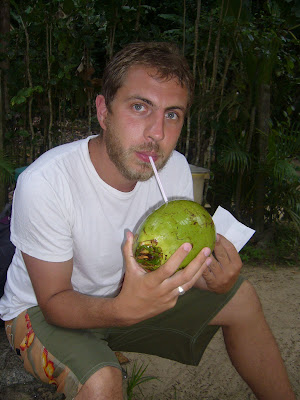
Drinking out of a coconut while waiting for our boat ride back:
From Ilha Grande, ...

As we waited for our 5pm boat ride back, we noticed ominous clouds moving in. Around 4:45, rain started falling. Since we were in our bathing suits, we weren't too bothered by this at first. However, after boarding the boat, the rain started coming down harder, and the roof of our boat was not shielding us all that well. Midway through the boat ride, the rain was pouring down in sheets, with high winds blowing the rain horizontally into the boat, where it pelted us with a hail-like strength and intensity. Our boat driver struggled to steer the boat due to the blinding rain blowing directly into his eyes. Huddled together with the fellow travelers, we couldn't help but laugh at the absurdity of the situation. Thankfully, we made it back safely to the town and dried off.

It rained for the remainder of our time on the island, so we spent most of the time relaxing after attempting to hike in the rain and realizing it was not a good idea. After that, we left the island and headed to Rio de Janiero!

Our first hotel in Rio was the Hotel Vermont, in Ipanema. Due to repeated warnings from travelers, family, and Ilha Grande residents, we were extremely cautious with our belongings in Rio, and therefore didn't bring out the camera much. Ipanema was a nice area, with the town having decent (but expensive) shopping, and the immense beach two blocks from our hotel. The beach itself was quite the scene, with all sorts of different types of people crowding together enjoying the sun and very intense surf. We ventured in to test the waters, and quickly realized that we were no match for the immense waves and strong current. Instead, we enjoyed the sun and witnessed the interesting sport of futvoli (volleyball without hands). The video below is from youtube -- we didn't take it:


We also took in some Bossa Nova, and I was thrilled to watch some great music after so much Andean Flute and Tango, which hadn't excited me as much. One night, we went to a smaller club, and the next, we went to a 3 floor club where they had a 10 piece band! The music was great at the clubs, and I also bought numerous CDs from the local bossa nova music store.

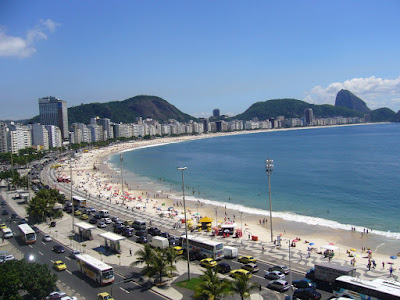
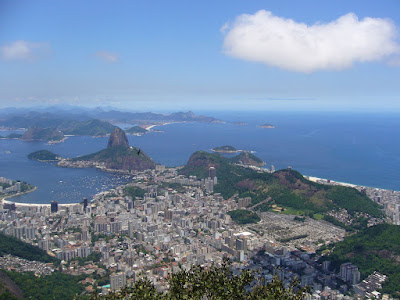
After a few days in Ipanema, we switched hotels and moved to Copacabana to finish the trip. Since this was the end, we decided to splurge, and we got to enjoy this view from our hotel room:

From Rio de Janier...


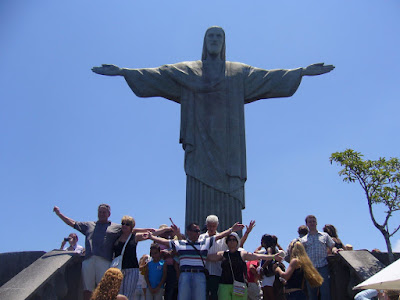
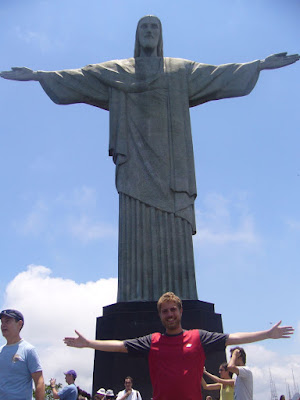
One day, we decided to visit Cristo Redentor (Christ the Redeemer). This immense statue is located atop a mountain, and the view overlooks nearly the entire city. Here are some photos:

From Rio de Janier...


From Rio de Janier...


Another day, we decided to try hang gliding. Here, we were driven to the top of a mountain, where we got strapped into some wings with a guide, then ran off of a platform and hoped that our wings would fly!


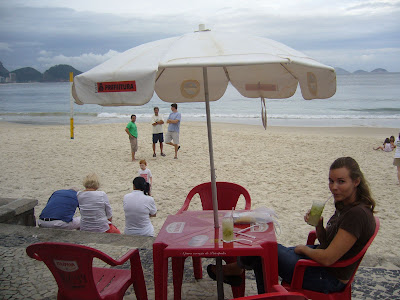
For our last night, we sipped caipirinhas along the beach, before heading to a churrascaria for some all you can eat meat!

From Rio de Janier...

All in all, I really enjoyed Brazil. Over time, little things kept happening that made us really appreciate the people and culture of Brazil. From the fresh fruit juice stands and snack bars at every block, to people politely asking at restaurants if their smoking is bothering neighboring tables (and doing something about it if it was), to the music, to the beaches, to the laid back personalities (despite our lack of Portuguese), I really felt at home here. I think Carrie and I both felt like if we hadn't been so tired and short on time, we could have spent a long time exploring Brazil. Perhaps someday we can head back to Brazil to explore some more!

Coming soon -- A final wrap up of the trip!

Sunday, December 30, 2007

Iguazu vs Niagra (and other ramblings)

From Iguazu Falls

Please note that all the pictures/movies in this posting are from the Iguazu falls. If you would like to see pictures/movies of the Niagara falls, please see our Niagara Falls posting by clicking HERE.

Last summer we went to Niagara Falls and the next summer (which, thanks to changing hemispheres, was only four months later) we went to Iguazu Falls. The entire time I toured Iguazu falls, I couldn't help but compare them with Niagara. Niagara Falls are hands down the best falls in North America and Iguazu Falls are hands down the best falls in South America. However, the similarities don't stop there.

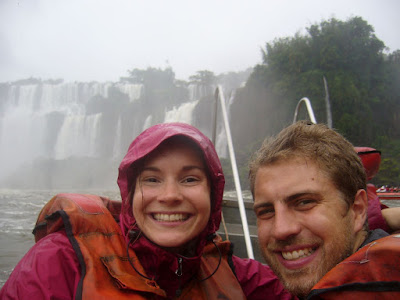
Niagara Falls are on the border between the USA and Canada, while Iguazu Falls are between Argentina and Brazil. The USA and Argentina are on the southern side of the falls, and both countries provide a much more intimate viewing of the their falls. At USA Niagara you can ride a boat called "Maid of the Mist" where they provide you with a rain jacket and you ride right up next to the falls. At Argentina Iguazu the boat ride is called the Nautic Adventure. There they don't even bother to give you a jacket because they ride up so close you literally can't see anything but water. Most people stripped down to their underwear or swimsuits for the ride. I wore my rain jacket, but the water poured down my neck and up my sleeves, so only the middle of my back stayed dry. Dan didn't wear the hood of his jacket so he got completely soaked. Below is a picture of us on the Nautic Adventure:

From Iguazu Falls


The USA and Argentina falls both also have catwalks where you can walk right next to the falls. The US catwalks are called "Cave of the Winds". Although you have to wait in a pretty long line, they give you a rain jacket and silly little slippers to wear. Then you get to walk so close to the falls that at times it is difficult to move forward because the wind/water is so strong. In Argentina they have the "Passeios Inferiores", which is 1.5 km of walkways that weave around the lower part of the falls. Although these are much more extensive than their US counterpart and you can get equally wet if you so desire, they aren't quite as intense as their US counterpart.

From Iguazu Falls


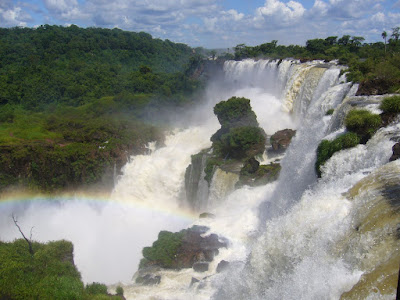
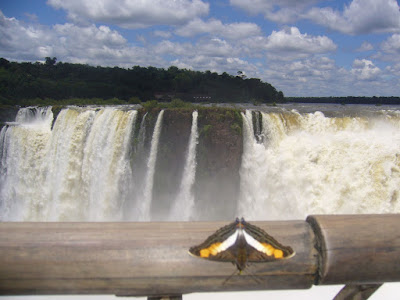
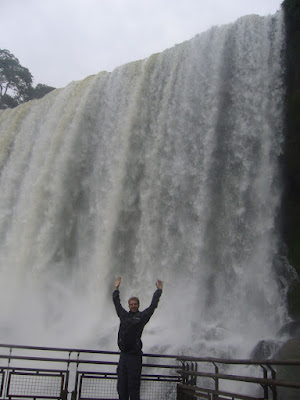
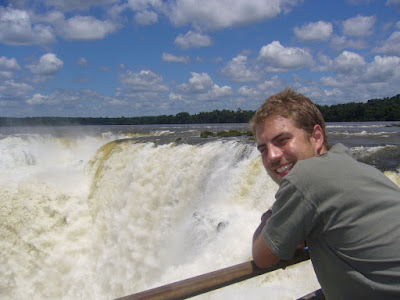
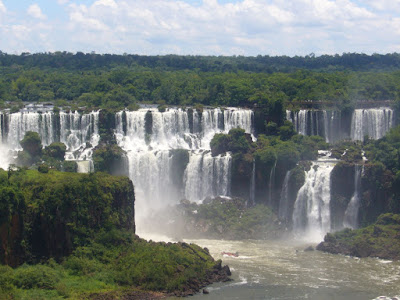
In both the USA and Argentina you can also walk around the top of the falls. However, with the Argentine version you can get much closer to the falls. It is actually broken into two sections called Garganta do Diablo (for the biggest waterfall) and Passeios Superiores (for most other falls). Garganta do Diablo translates to devil's throat, and seeing all those tons of frothy water come erupting out of the river is quite hypnotizing:

From Iguazu Falls


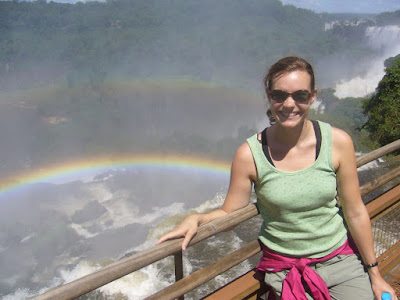
The Passeios Superiores is especially great on sunny days because in addition to the falls, you can see tons of rainbows. The first day we went to the falls it was pouring rain by the time we got to the Passeios Superiores, but the next day was sunny so we went back, and it was well worth the repeat trip. Below is a movie taken from the Passeios Superiores, but if you can't see it, try clicking here.


However, crossing the international borders was definitely easier in North America, which simply involved paying a small fee and walking across a bridge right next to the parks. In South America we had to take a bus between the Argentine and Brazilian towns in addition to taking separate buses from the towns to their respective falls. This would have been very difficult to do in one day. We ended up spending two days on the Argentine side and one day on the Brazilian side.

We also had to get a Brazilian visa because we were planning to travel around Brazil after seeing the falls (you can avoid getting a visa if you only go to Brazil for the day). For every other South American country we just showed up at the border and paid nothing. However, for Brazil they require that you apply for a visa in advance and pay them $100 US (however, I can't be too mad about the $100 because Brazil charges everyone however much their country charges Brazilians to enter, and the US charges them $100 for visas). We couldn't get our Brazilian visas before leaving for our trip because they are only good for 3 months and we were going to Brazil at the end of our 3.5 month trip. We tried to get them in Buenos Aires, Argentina a few weeks before heading up to Iguazu. However, after first finding our way to the Brazilian embassy, being told we were at the wrong place, and then making it to the Brazilian consulate, we found that they were only open in the morning. Fortunately, the security guard was able to give us the huge list of things we needed to obtain the visa, including exit tickets for how we would leave Brazil, entry tickets for how we would enter Brazil, address and phone number of where we would be staying in Brazil, credit card photo copies, and two months worth of bank statements.

The next morning we woke up early and headed down to the Brazilian consulate with as much of the info as we could muster. There were about five groups ahead of us in line, and one by one we saw each one of them get rejected. As each one of them left, I asked what they were missing. One girl said she hadn't yet booked her hotel in Brazil so she didn't have a Brazilian address. We were in the same predicament, so the people ahead of us in line let us copy their address. I felt like I was cheating on a test, but seriously, why do they need that, especially if we planned on staying in three or four different hotel while in Brazil. However, we still got rejected because we didn't have entry tickets. We were planning to hop on a bus to take us across the Iguazu border, which is literally as formal as hopping on a CTA (local Chicago) bus, so there was no way to purchase advance tickets. We explained the situation to the lady behind the counter, so she suggested that we should just wait and get our visas in Iguazu. I worried about waiting until the last minute to get our visas, but it turned out to be MUCH easier there. All we had to do was fill out a form and pay them the $100 and we had our visas in less than an hour. They didn't even ask to see tickets, bank statements, or even yellow cards (proof of immunizations)! We learned that getting visas in BsAs in nearly impossible, but then again, we found that any sort of administrative task, such as buying plane tickets, calling home, or booking hotels, is a huge pain there.

So any way, back to Iguazu versus Niagara. Brazil and Canada are both on the northern side of their falls. However, Canada is the much more touristy side for Niagara, but Argentina is actually the more the touristy side for Iguazu. Foz do Iguaçu, the Brazilian town, is big enough that it has more going on than just the falls. I suspect that it is closer aligned with Buffalo, NY. On the other hand, both the Canadian and Brazilian sides focus much more on the panoramic views of the falls rather than getting right up in there like you do in the US and Argentina. However, unlike Canada, Brazil provides a little bit more than just the panoramic view. You also get to ride a cute little double decker bus from the park's edge to the falls, and there is one catwalk that will get you a little wet (although not near as wet as you can get in Argentina or the USA).

From Iguazu Falls


One thing that Iguazu has that Niagara definitely lacks is the jungle and all of the fun jungle animals. In Argentina we saw the following:

Giant lizard animal (its body was about a foot long):
From Iguazu Falls


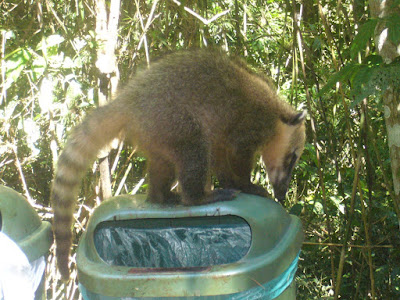
Several packs of raccoon-like animals called coatis:
From Iguazu Falls


Some sort of rodent that looked like a cross between a guinea pig and a rat:
From Iguazu Falls


In Brazil we saw hundreds of millipedes all over that path that were anywhere from 2-8 inches long:
From Iguazu Falls


On both sides we saw tons of pretty butterflies:
From Iguazu Falls


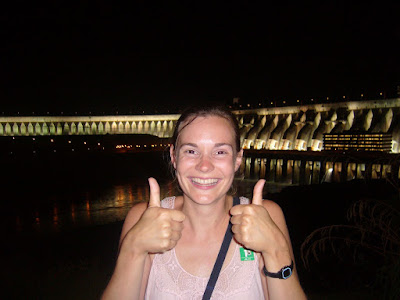
Since there was not quite as much to do on the Brazilian side of the falls, we also went to see the light show at the Itaipu Dam. The Itaipu Dam provides 94% of Paraguay's electricity and 20% of Brazil's electricity, but it also caused a lot of debt for Brazil and destroyed a lot of rain forest in its making. It was obvious that the light show was an attempt to get people to accept the dam. We had to arrive an hour early for the show, and many of the ladies were wearing nice cocktail dresses. Fortunately, I had on my nicest jeans, sparkle butt and all. When it was time for the show to start we piled into buses. There were so many people at the show it took five buses to fit us all! The buses let us out on a hill overlooking the dam. The lights dimmed and two Vegas-style announcers came out and welcomed us. Then we watched a short video on the making of the dam, which, judging by the soundtrack, was created sometime in the mid-70's. Finally, the video screens lifted and it was time for the show! We heard music, and with each phrase of the song, another portion of the dam would light up. As the music got more intense, the dam got brighter and brighter. After about five minutes, the song was over and the dam was completely lit up. Then the music stopped and everyone got up to leave. We piled back into the buses, did a quick drive down closer to the damn, and then headed back to the entrance gates. It was neat seeing the dam, but the show could use a little work.

From Iguazu Falls


Overall, I'd say that both Niagara and Iguazu falls are amazing. However, if you're tight on time, the southern side of the falls (USA or Argentina) tend to be a little more thrilling. Avoid getting a Brazilian visa in Buenos Aires at all costs, and unless you're really excited about dams, I'd skip the Itaipu light show.

From Iguazu Falls

Monday, December 24, 2007

More Argentina!

Merry Christmas and Happy New Year!

Carrie and I are back in the US, enjoying the winter wonderland that is Massachusetts. We are in good health and arrived home safely, and enjoying things such as home cooked meals, speaking English, and having friends and family around. Now that we are back home, we can write more about what we did over the last month and a half.

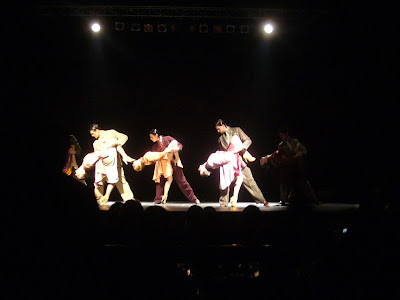
Back in early November, after Uruguay, Carrie and I settled back in Buenos Aires. For a few days, we would work on logistical trip planning during the day, and doing fun activities at night. One night, we stumbled upon tickets to a dinner and tango show. The dinner, of course, consisted of a giant steak with potatoes, salad, and red wine. As an added bonus, we got to see a fun tango show:

From Buenos Aires ...

The show was a lot of fun, and we made friends with some Columbian ladies who were sharing our ride to and from the show.

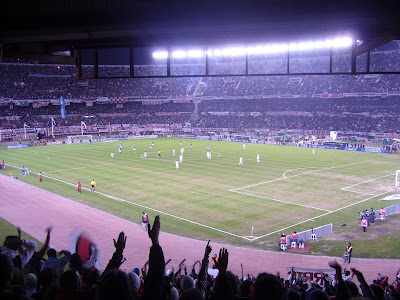
The next night, we went to a soccer match at River Plate Stadium, between River Plate and Arsenal (the Argentine team). Of course, the game ended in a 0-0 tie before going to penalty kicks (reinforcing my idea that soccer is not a very exciting game). The crowd certainly was into it, singing throughout the game.

From Buenos Aires ...


I was amused when we decided to grab some food before halftime, and there was NOBODY at the concession stand, because everyone was too busy watching the game. The most amazing / interesting moment for me came at the end of the game, when Arsenal managed to win the game in penalty kicks. After they made the winning kick, the incredibly noisy crowd became dead quiet. The only sound I could hear was that of the players themselves celebrating, and the faint sound of the visiting fans celebrating in their own blocked off balcony section. For the home fans, to add to their pain, they actually had to wait in the stadium for the visiting fans to finish celebrating and leave the stadium before they could leave, because apparently in soccer the opposing fans cannot ever be in the same vicinity. Aside from the unfortunate outcome of the game, we had a good time and enjoyed seeing the soccer experience.

After that, our friend Joe arrived, and we saw more sights of Buenos Aires, witnessed the Gay Pride Parade, and traveled to Mendoza to enjoy the best of Argentine wines from their sources. Since Joe may be providing a guest post to the blog, I'll refrain from going into detail until after he's written his post.

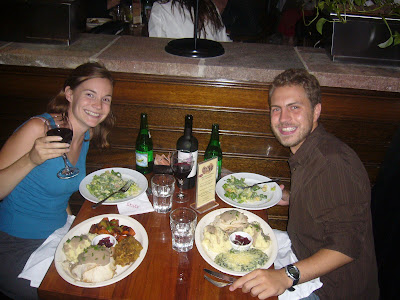
After Joe left, it was Thanksgiving, and one of the toughest stretches of our trip. Missing Thanksgiving in the US was hard, especially hearing about how much fun our families were having and knowing we were by ourselves in a country that didn't care much about Thanksgiving. In addition, we had some difficulties making some of the travel arrangements, which were starting to wear us down. Luckily, we were able to find a restaurant in Buenos Aires that served us a traditional Thanksgiving dinner!

From Buenos Aires ...

The day after Thanksgiving, we packed up for our overnight bus trip that evening. During the day, we tried to view some downtown sights in Buenos Aires, but it seemed that every place we tried to visit was closed for renovations. Finally, we gave up and decided to have a steak lunch, which made things better for the time being (Argentine steak meals tend to do that). After that though, we went to the bus station, and had our bag stolen while waiting for our bus company's computers to come back online so they could print our tickets. After realizing that what they stole was not so bad, we began to feel better and boarded our bus.

Our bus was 19 hours, from Buenos Aires to Bariloche, in the Lake District of southern Argentina. We boarded a fancy "cama suite" bus with seats that reclined 180 degrees. It was extremely comfortable, and they even served hot meals, wine with dinner, and dessert with champagne and whisky! The only downsides were our seat location (in the back by the loud engine noise) and our window (covered by the bus exterior advertisements).

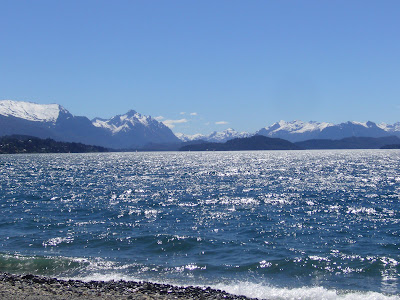
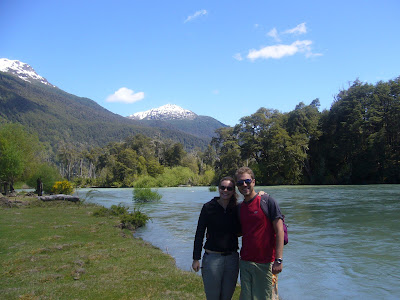
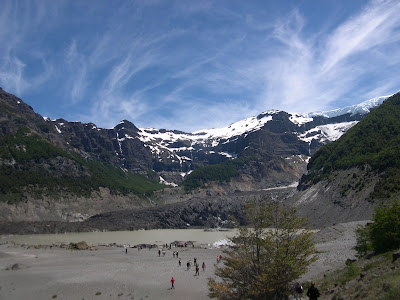
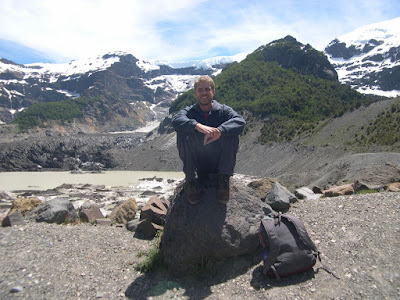
Barilcohe was incredibly beautiful. We stayed in a lovely hosteria called La Pastorella, owned by a friendly husband and wife. Our excursions consisted of white water rafting and bus rides providing beautiful views of lakes and mountains. The bus rides themselves became a bit boring due to the tour guide's rapid Spanish, but the scenery was nice. Here are some photos:

From Bariloche, Ar...


From Bariloche, Ar...


From Bariloche, Ar...


From Bariloche, Ar...

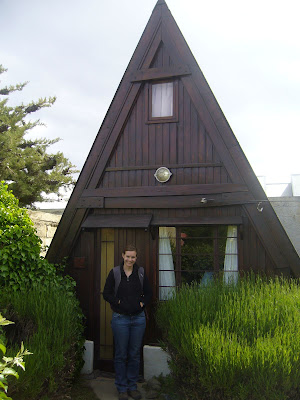
After Bariloche, we headed even farther south (50 degrees south latitude) to El Calafate, in Patagonia. It was here that we got to view some incredible Glaciers. We stayed at an incredibly charming place called "Las Cabanitas", and had our own A-Frame cabin:

From El Calafate, ...

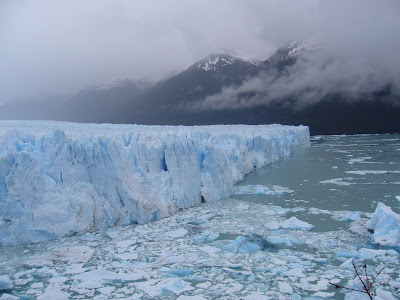
From there we visited the Perito Moreno Glacier. I'll just show some pictures and a video here:

From El Calafate, ...


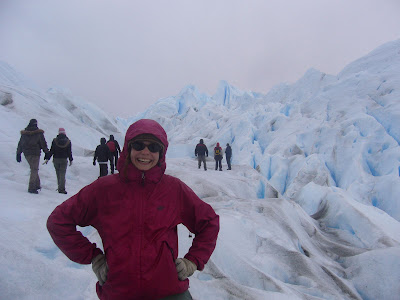
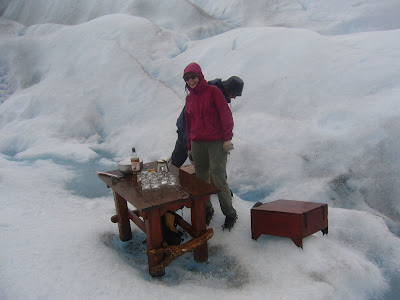
The most exciting part of the day might have been actually getting to hike on the glacier itself, using crampons on our boots, followed by a surprise whisky and candy snack at the end:

From El Calafate, ...


From El Calafate, ...


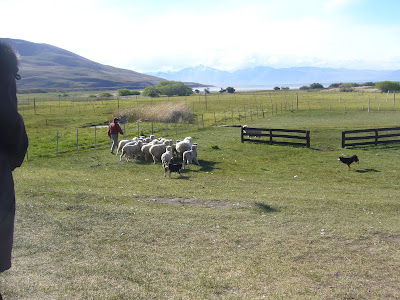
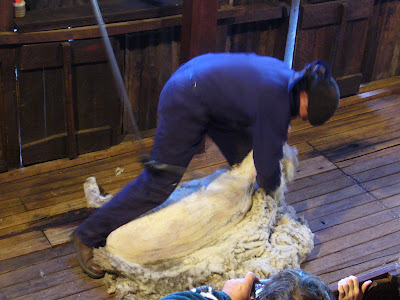
The next day, we visited an "Estancia", also known as a sheep ranch. We got to watch a sheep herding demonstration, a sheep shearing, and then eat a giant barbecue dinner:

From El Calafate, ...


From El Calafate, ...


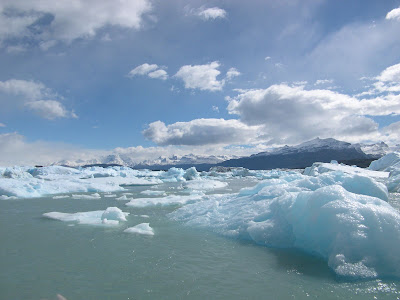
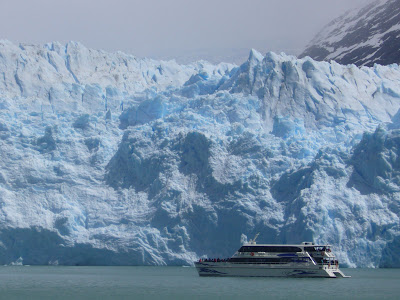
For our last day in El Calafate, we took a boat cruise through Lago Argentina, visiting multiple glaciers in the area. This was very cold, but incredibly scenic!

From El Calafate, ...


From El Calafate, ...


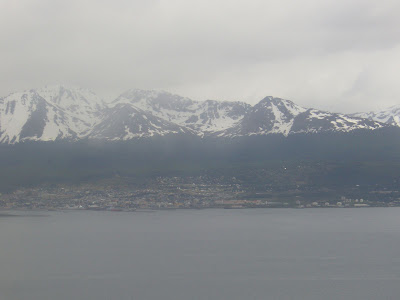
El Calafate was one of my favorite places we visited on the trip. It was sunny until 10:45, not too cold away from the glaciers, and incredibly scenic. It was also very laid back and relaxing. On our flight back to Buenos Aires, the plane made a stop at Ushuaia, the very bottom of South America by Antartica. We had decided not to visit the town, and when we saw the view from the plane, we were happy with our decision:

From El Calafate, ...


After that, we headed north to Iguazu Falls and Brazil, which we will write about in future posts... Feel free to browse our pictures, as they are now all uploaded! Happy Holidays!